What Is a Precious Metals IRA?
A precious metals IRA is a self-directed IRA governed by IRC Section 408(m) that holds physical gold, silver, platinum, or palladium at an IRS-approved depository in place of stocks or mutual funds. You control which metals to buy and sell, but a qualified custodian holds legal title to your metals, and an IRS-licensed depository physically vaults them — you may not take possession of either at any point while the metals remain inside the IRA.

Your precious metals IRA operates under IRC 408(m), a carve-out Congress added in the 1997 Taxpayer Relief Act to permit physical gold, silver, platinum, and palladium inside self-directed retirement accounts. Your precious metals IRA may hold four metals at specific purity thresholds: gold (≥.9999 fine), silver (≥.999 fine), platinum (≥.9995 fine), and palladium (≥.9995 fine). The American Gold Eagle is exempt from the .9999 standard despite being .9167 fine — a specific carve-out written directly into IRC Section 408(m)(3)(A).
Physical gold has historically maintained purchasing power during equity downturns. In 2020, gold returned +25.5% for the full calendar year (World Gold Council, Gold Hub Annual Returns, 2021) while the S&P 500 fell 33.9% from its February 19 peak to its March 23 trough — a negative return correlation that can meaningfully reduce sequence-of-returns risk during market dislocations for retirement savers within 10 years of withdrawal.
Is a Precious Metals IRA a Good Idea?
A precious metals IRA is a strong fit for investors who (1) hold a large, equity-heavy retirement portfolio and want uncorrelated diversification, (2) have a 10+ year time horizon before required minimum distributions (RMDs) begin, and (3) can absorb higher annual fees — typically $200–$600 per year compared to $0–$50 for a standard brokerage IRA.
A precious metals IRA is a poor fit if your retirement timeline is under 5 years (storage fees erode gains), if your total IRA balance is under $25,000 (fixed fees represent 2–3%+ of assets annually), or if you need dividend income from your retirement portfolio — precious metals are non-yield-bearing assets.
Precious metals offer a strong inflation hedge and low equity correlation, but no dividends or compounding -- making them a preservation tool, not a growth engine. They require four parties to manage (versus one for a standard IRA), carry higher IRS compliance complexity, and have lower liquidity than stocks due to dealer spreads on exit. Best for: preservation-focused savers with $25,000+ and a 10+ year horizon. Not ideal for: growth-focused savers, small accounts, or near-retirees.
Who Is Eligible to Open a Precious Metals IRA?
Any U.S. taxpayer with earned income (or a spouse with earned income filing jointly) may open a precious metals IRA. The same contribution limits apply as any other IRA: $7,000 annually ($8,000 if age 50 or older) for tax years 2025–2026. Rollovers from 401(k) plans, traditional IRAs, and SEP IRAs have no dollar limit and can be completed without a taxable event when handled as direct transfers between custodians.
Eligibility quick-check: Do you have earned income or rollover-eligible retirement funds? Is your account balance at least $10,000–$25,000 to make fees cost-effective? Do you have a 10+ year horizon before needing distributions? Checking all three boxes makes a precious metals IRA worth pursuing.
You can hold precious metals inside any traditional, Roth, SEP, or SIMPLE IRA once you open it through a self-directed custodian — the account type controls your tax treatment, not your ability to hold metals. Traditional IRA: pre-tax contributions, taxable distributions. Roth IRA: after-tax contributions, tax-free qualified distributions, no RMDs during owner's lifetime. SEP IRA: employer contributions up to 25% of compensation or $69,000 for 2024. SIMPLE IRA: employee/employer contributions with lower limits.
How to Open a Precious Metals IRA: 6 Steps
Opening a precious metals IRA requires four parties and takes 1–3 weeks; the six steps below cover every decision point in sequence. Most investors complete all six steps within two to three weeks from the day they submit their custodian application.
Step 1 — Choose a Self-Directed IRA Custodian
Select an IRS-approved non-bank trustee that specializes in alternative assets (e.g., Equity Trust, STRATA Trust, Kingdom Trust). Verify the custodian's fee schedule: setup fees $50–$150, annual custodial fees $75–$300. Confirm which IRS-approved depositories your custodian partners with — the most widely used are Delaware Depository (Wilmington, DE), Brink's Global Services (Salt Lake City, UT), and IDS of Texas (Dallas, TX). Ask specifically whether they offer segregated (allocated) storage — your exact coins and bars vaulted separately under your account number — or commingled (pooled) storage at lower cost (0.10–0.15% vs. 0.15–0.25% for segregated). Equity Trust offers full digital onboarding for investors who prefer a completely online application process. Ask whether your depository holds LBMA-accredited bars and carries Lloyds of London all-risk insurance -- both are industry-standard markers of a top-tier vault.
Step 2 — Open Your Self-Directed IRA Account
Complete the custodian's application online or by mail. Designate account type (traditional, Roth, SEP, or SIMPLE), name your beneficiaries including any beneficiary IRA designation, and provide government-issued identification. Most custodians approve applications within 3–7 business days. Review the custodian agreement carefully: pay attention to fee escalation clauses, termination fees, and minimum balance requirements.
Step 3 — Fund the Account (Rollover or Contribution)
Three funding options: (a) Direct transfer — your existing IRA or 401(k) custodian sends funds directly to your new self-directed IRA custodian. No tax event, no dollar limit, no 60-day deadline. This is the safest method and eliminates withholding risk. (b) Indirect rollover — you receive funds personally and must redeposit within 60 calendar days (the 60-day rollover rule). Triggers 20% mandatory withholding on 401(k) funds; limited to one indirect rollover per 12-month period per IRS Revenue Ruling 2014-9. Missing the deadline converts the full amount into a taxable distribution. (c) Annual contribution up to $7,000/$8,000 from earned income. Your new custodian provides wire transfer instructions and a Letter of Acceptance for the sending institution; a rollover specialist at the receiving firm can walk you through the paperwork step by step.
Step 4 — Choose Your Metals and Dealer
Select an authorized precious metals dealer who confirms IRS fineness requirements on every product. Request an itemized quote showing spot price, spot price premium (dealer markup), and total cost per unit. Compare premiums across at least two dealers — markups on bullion coins typically run 3–8% over spot price, while bars range 1–5%. Gold spot price is quoted on COMEX (Commodity Exchange Inc., part of CME Group) in USD per troy ounce. Verify the dealer's BBB rating, buyback policy, and shipping/insurance practices before placing any order.
Step 5 — Purchase IRS-Approved Metals and Direct to Depository
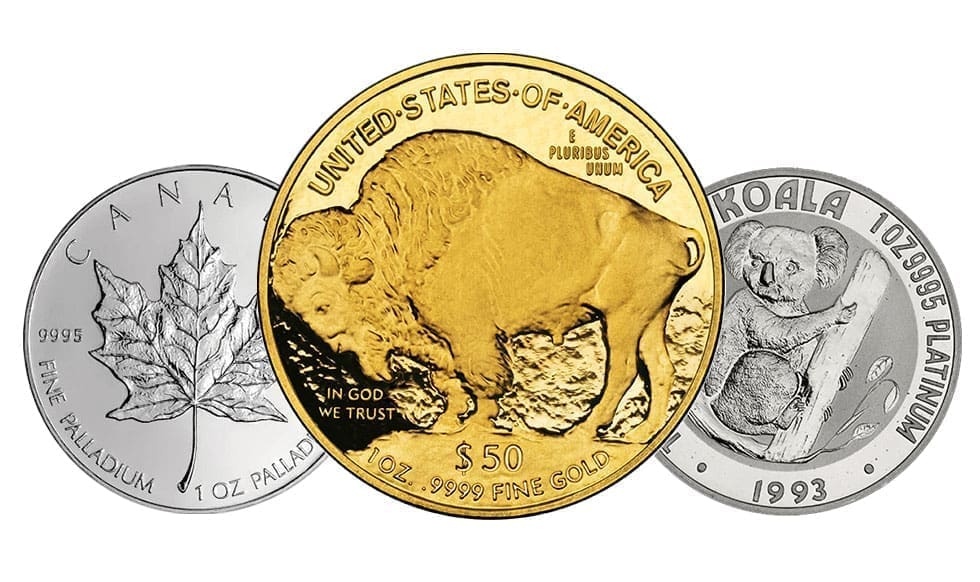
Eligible bullion coins include American Gold Eagles, American Silver Eagles, Canadian Gold Maple Leafs, Austrian Philharmonics, and PAMP Suisse gold bars. Proof coins may qualify if uncirculated, in original mint packaging, and meeting purity thresholds. Prohibited: numismatic coins (valued for rarity rather than metal content), collectibles under the collectibles rule (IRC Section 408(m)(2)), and items from non-approved refiners. Your custodian — not you — places the purchase order and arranges direct shipment to the IRS-approved depository. You never personally handle the metals. Self-dealing — purchasing metals from yourself or a disqualified person — is a prohibited transaction regardless of pricing.
Step 6 — Ongoing Administration and RMDs
After purchase, your depository holds your metals and your custodian handles annual reporting. Your custodian files IRS Form 5498 (contributions and fair market value) by June 1 each year, and IRS Form 1099-R (distributions) by January 31. Required minimum distributions (RMDs) begin at age 73 under SECURE 2.0. For a traditional precious metals IRA, RMDs may be taken as cash (requiring a metal sale at spot price) or as an in-kind distribution — you receive physical metals, with fair market value on the distribution date counted as taxable income. Roth IRA accounts have no RMDs during the original owner's lifetime. Consult IRS Publication 590-B for complete RMD calculation tables. Failure to take required RMDs triggers a 25% excise tax on the shortfall (SECURE 2.0). Beneficiary IRA rules differ: non-spouse beneficiaries generally must deplete inherited precious metals IRAs within 10 years.
Checklist: Opening and Funding a Precious Metals IRA
- Confirm a precious metals IRA fits your portfolio (balance $25,000+, 10+ year horizon)
- Choose account type: traditional IRA, Roth IRA, or SEP IRA
- Select a self-directed IRA custodian (Equity Trust, STRATA Trust, Kingdom Trust)
- Confirm approved depository options: Delaware Depository, Brink's Global Services, IDS of Texas
- Open the account online or by mail; review fee schedule and minimum investment
- Fund via direct transfer (safest) or indirect rollover (60-day rollover rule applies)
- Select IRS-eligible bullion coins and bars — avoid numismatic coins and collectibles
- Have custodian place the purchase order and ship metals directly to IRS-approved depository
- File IRS Form 5498 annually; plan for required minimum distributions (RMDs) at age 73
IRS Metal Eligibility Rules
The IRS approves four metals at specific purity thresholds under IRC Section 408(m)(3). Only bullion coins and bars on the approved list qualify — numismatic coins, collectibles, and below-fineness bullion are prohibited under the collectibles rule (IRC Section 408(m)(2)).
Fineness Standards by Metal
Gold must be .9999 fine (99.99% pure). Silver .999 fine (99.9% pure). Platinum .9995 fine. Palladium .9995 fine. Exception: American Gold Eagles are specifically exempt despite being .9167 fine — codified in IRC Section 408(m)(3)(A). All bars must be produced by a NYMEX- or COMEX-approved refiner or national government mint. Fractional coins (1/10 oz, 1/4 oz, 1/2 oz) are permitted provided they meet the fineness standard and are on the IRS-approved list.
Approved Bullion Coins and Proof Coins
Approved bullion coins include American Gold Eagles (all sizes), American Silver Eagles, American Gold Buffalo (.9999 fine), Canadian Gold and Silver Maple Leafs, Austrian Gold and Silver Philharmonics, and Australian Gold Kangaroos. Proof coins may qualify if uncirculated, in original mint packaging, and meeting purity thresholds. All bars must carry appropriate hallmarks from NYMEX- or COMEX-approved refiners.
What Is Prohibited
Prohibited items include: numismatic coins valued for historical rarity or collector premium rather than metal content (e.g., pre-1933 U.S. gold coins), coins below fineness thresholds (e.g., pre-2018 South African Krugerrands at .9167 fine), and any coin or bar treated as a collectible under the collectibles rule (IRC Section 408(m)(2)). Purchasing a prohibited item with IRA funds triggers a prohibited transaction: the purchase price is treated as a distribution subject to ordinary income tax plus 10% early withdrawal penalty if under age 59½. Reference: IRS Publication 590-A and IRC Section 408(m).
Prohibited Transactions: What Disqualifies Your IRA
Taking physical possession of your IRA metals — even temporarily — is a prohibited transaction under IRC Section 4975 and triggers immediate full distribution of the account's fair market value, subject to ordinary income tax and a 10% early withdrawal penalty if you are under age 59½.
Five prohibited transaction categories relevant to precious metals IRAs: (1) Home storage of IRA metals — full distribution + 10% early withdrawal penalty. (2) Purchasing numismatic or collectible coins — purchase amount treated as distribution. (3) Self-dealing: buying metals from a disqualified person (yourself, spouse, parent, child, or entity where you own 50%+) — full distribution. (4) Personally transporting metals to the depository — constructive receipt = deemed distribution. (5) Pledging IRA assets as loan collateral — partial or full distribution.
A disqualified person under IRC Section 4975(e)(2) includes you, your spouse, lineal descendants, fiduciaries of the IRA, and any entity in which you own 50% or more. The most common self-dealing violation the IRS pursues: purchasing metals from your own coin dealership into your IRA. This constitutes a prohibited transaction regardless of whether the price was fair market value.
Home Storage Gold IRA Warning
Some promoters advertise home storage gold IRA arrangements using an LLC structure to claim you can store IRA metals at home. Multiple Tax Court rulings — including McNulty v. Commissioner (2021) — have held that home storage triggers a deemed distribution of the full account value. The IRS has pursued these arrangements aggressively. IRS-approved storage requires a qualified trustee or custodian holding the metals at an approved depository. There is no legitimate IRS exception for home storage of precious metals IRA assets.
Rollover vs. Transfer: Moving Existing Retirement Funds
A direct transfer between custodians has no tax consequences and no 60-day deadline. An indirect rollover creates withholding risk and is limited to once per 12-month period. Understanding the distinction prevents the most expensive compliance mistake investors make when funding a precious metals IRA.
Direct Transfer (Trustee-to-Trustee)
In a direct transfer, your current IRA custodian sends funds directly to your new self-directed IRA custodian. You never receive the funds personally. There is no withholding, no 60-day deadline, no limit on how many direct transfers you may complete in a year, and no taxable event. This is the recommended funding method for all precious metals IRA accounts — your new custodian handles the paperwork and coordinates with the sending institution.
Indirect Rollover (60-Day Rollover Rule)
In an indirect rollover, your current plan distributes funds to you personally. You have exactly 60 calendar days to redeposit the full amount into your new IRA. For 401(k) funds, the plan administrator must withhold 20% for federal taxes — you must replace this withheld amount from personal funds and reclaim it as a tax refund. If you miss the 60-day rollover rule deadline, the entire distributed amount becomes a taxable distribution. The IRS permits only one indirect rollover per 12-month period across all your IRAs combined (IRS Revenue Ruling 2014-9).
401(k) to Precious Metals IRA Rollover
A direct rollover from a 401(k) into a precious metals IRA is tax-free, has no dollar limit, and does not count against the 12-month indirect rollover limitation. Your new custodian provides a Letter of Acceptance; your 401(k) plan administrator wires funds directly. Most 401(k)-to-IRA rollovers complete in 2–4 weeks. You may only roll over 401(k) funds from a former employer's plan or if your current plan allows in-service distributions.
Precious Metals IRA Fees: Full Cost Breakdown
Expect $200–$600+ annually in combined setup, custodial, and storage fees — 2–3x higher than a standard brokerage IRA. Fee transparency is the single most important factor when choosing a custodian.
Fee breakdown: (1) Account setup: $50–$150 one-time. (2) Annual custodial/administrative fee: $75–$300/year. (3) Annual storage fee: 0.15–0.25% of asset value for segregated (allocated) storage; 0.10–0.15% for commingled storage; some custodians charge flat $100–$150/year. (4) Dealer spot price premium: 3–8% for bullion coins, 1–5% for bars. (5) Wire transfer fees: $25–$50 per transaction. (6) Liquidation fees on metal sales: $25–$50 at some custodians. Always request a complete written fee schedule before opening an account.
Fee modeling example: a $50,000 account paying $150 setup + $200 annual custodial + $150 flat storage + 5% dealer premium on initial purchase ($2,500) = approximately $3,000 in year-one total costs (6% of assets), declining to approximately $350/year in years 2+. Percentage-based storage fees favor smaller accounts; flat fees favor larger holdings. Model your expected account balance across a 5-year horizon and compare total costs across at least two custodians.
Ranking Methodology for Featured Companies
Companies featured in our comparison are evaluated on five criteria: (1) fee transparency — published schedule with no hidden charges; (2) BBB rating — A+ preferred with documented complaint resolution; (3) minimum investment threshold; (4) depository partnerships — number of approved vault locations and storage options; (5) years in continuous operation and verified customer review volume. Companies must hold A+ BBB ratings and have operated for at least 8 years to qualify for our top-5 ranking.
Precious Metals IRA vs. Physical Gold: Key Differences
The primary difference is tax treatment: IRA metals grow tax-deferred but require a custodian and approved depository; physical gold outside an IRA offers direct possession but no tax shelter. Each structure has distinct advantages depending on your goals. A gold ETF such as SPDR Gold Shares (GLD) or Sprott Physical Gold Trust (PHYS) provides gold price exposure inside a brokerage IRA with near-zero annual costs -- a viable ETF alternative for investors who prefer liquidity over physical ownership.
Precious metals IRA advantages: tax-deferred growth (traditional) or tax-free growth (Roth), no capital gains tax on metal appreciation until distribution, ERISA and state creditor protections. Disadvantages: cannot take physical possession until distribution at age 59½+, annual fees of $200–$600+, four-party administrative structure, required minimum distributions (RMDs) starting at age 73.
Physical gold outside IRA: advantages include direct possession and full control, no annual fees, no RMDs, and no custodian required. Disadvantages: capital gains taxed at the collectibles rate (28% maximum federal) on appreciation, no tax shelter, post-tax storage and insurance costs, no ERISA creditor protections. Gold ETFs (GLD, IAU) offer intraday liquidity and lower annual fees but provide no direct ownership of physical metal — a key distinction for investors seeking protection against counterparty risk and systemic financial disruption.
Precious Metals IRA Tax Rules and RMDs
Required minimum distributions (RMDs) begin at age 73 under the SECURE 2.0 Act (effective 2023). Traditional precious metals IRA distributions are taxed as ordinary income at your marginal rate. Roth IRA accounts have no RMDs during the original owner's lifetime, and qualified distributions (after age 59½ with 5-year holding period) are entirely tax-free.
In-kind distributions: you may receive physical metals instead of cash. Your custodian arranges shipment of the metals to your address or a non-IRA storage facility. The fair market value on the distribution date — based on spot price — determines the taxable amount. This allows investors approaching retirement to take physical possession without triggering a full account liquidation.
IRS reporting: your custodian files IRS Form 5498 (contributions and fair market value) annually by June 1, and IRS Form 1099-R (distributions) by January 31. You must report all distributions on your federal tax return. Consult IRS Publication 590-B for complete RMD calculation tables and worksheets. Failure to take required RMDs triggers a 25% excise tax on the shortfall (reduced from 50% under SECURE 2.0). Beneficiary IRA rules differ: non-spouse beneficiaries generally must deplete inherited precious metals IRAs within 10 years under the SECURE Act.
Best Precious Metals IRA Companies 2026
The five highest-rated precious metals IRA companies in 2026 all hold A+ BBB ratings; they differ in minimum investment, fee structure, and storage partnerships.
| # | Company | Rating | Min. Investment | BBB | Experience | Actions |
|---|---|---|---|---|---|---|
| 1 |  Best Value Premium Best Value Premium | ★★★★★ | $50,000 | A+ | 12+ | Get Free KitRead Review |
| 2 |  White Glove Service White Glove Service | ★★★★★ | $25,000 | A+ | 16+ | Get Free KitRead Review |
| 3 |  Most Welcoming Most Welcoming | ★★★★★ | $10,000 | A+ | 9+ | Get Free KitRead Review |
| 4 |  Longest Track Record Longest Track Record | ★★★★★ | $10,000 | A+ | 20+ | Get Free KitRead Review |
| 5 |  Modern Choice Modern Choice | ★★★★★ | $20,000 | A+ | 8+ | Get Free KitRead Review |
Augusta Precious Metals
American Hartford Gold
How to Choose a Precious Metals IRA Company
The five highest-rated precious metals IRA companies in 2026 all hold A+ BBB ratings; they differ in minimum investment, fee structure, and depository partnerships. Evaluate companies on: fee transparency (published schedule with no hidden charges), buyback guarantee terms (competitive pricing, documented process), depository options (segregated vs. commingled, number of vault locations), BBB and BCA rating history, and minimum investment requirements ($5,000 to $50,000+ depending on service tier). The leading dealers -- Augusta Precious Metals (minimum $50,000), Goldco (minimum $25,000), Birch Gold Group (minimum $10,000), Noble Gold Investments (minimum $20,000), and American Hartford Gold (minimum $10,000) -- all partner with multiple IRS-approved custodians.
Red flags: high-pressure sales tactics, claims of guaranteed returns on precious metals, recommendations to buy high-premium numismatic or collectible coins for your IRA (these may trigger prohibited transactions), no published fee schedule, and lack of BBB accreditation or unresolved complaints. Legitimate companies provide educational resources, transparent pricing, and time to make informed decisions without urgency.
Common Mistakes When Opening a Precious Metals IRA
Five costly mistakes account for the majority of compliance problems and financial losses in precious metals IRAs:
1. Buying Non-IRS-Approved Coins
Purchasing numismatic, collectible, or below-fineness coins triggers a prohibited transaction under the collectibles rule (IRC Section 408(m)(2)). The IRS treats the purchase amount as an early distribution: ordinary income tax plus a 10% early withdrawal penalty if under age 59½.
2. Attempting Home Storage
Storing IRA metals at home — even in a safe or home vault — violates IRC Section 408(m). The IRS considers this a distribution of the entire account value. The Tax Court upheld this in McNulty v. Commissioner (2021). There is no LLC structure that makes home storage gold IRA arrangements IRS-compliant.
3. Missing the 60-Day Rollover Window
With an indirect rollover, you must redeposit funds within 60 calendar days. Missing the 60-day rollover rule deadline means the entire amount is treated as a taxable distribution. Use a direct transfer (trustee-to-trustee) to eliminate this risk entirely.
4. Working with an Uncredentialed Dealer
Dealers without BBB accreditation, transparent pricing, or verifiable business history pose risks of overcharging on spot price premiums, selling ineligible products, or failing to deliver. Check BBB and BCA ratings, read verified reviews, and request references before committing.
5. Failing to Compare Storage Fee Structures
Percentage-based storage fees (0.15–0.25%) favor smaller accounts; flat fees ($100–$150) favor larger holdings. Choosing the wrong structure can cost hundreds of dollars annually. Model your expected account balance across a 5-year horizon and compare total costs including setup, custodial, and storage before committing to a custodian.